Serengeti vs Masai Mara: Which Should You Choose?
Serengeti vs Masai Mara: choose the Serengeti for space and year-round migration, the Mara for compact big cat viewing and easy Nairobi access. Here is how to decide.
Short answer: in the Serengeti vs Masai Mara debate there is no wrong choice, because they are one ecosystem split by a border. Choose the Serengeti for sheer space, a migration you can follow almost all year and a quieter feel. Choose the Masai Mara for compact, reliable big cat viewing, a short hop from Nairobi and the option of private conservancies. If time allows, see both.
People often ask whether Tanzania or Kenya is the better safari country. The honest answer is that both are superb, and the real question is which style of trip suits you. This guide compares the two side by side, so you can decide with confidence.
One ecosystem, two countries
The Serengeti and the Masai Mara are not rivals in the wild. The animals have never heard of the border. Roughly 1.5 million wildebeest, together with hundreds of thousands of zebra and gazelle, travel in a loop between the two, following the rains and fresh grass. The Mara is simply the northern tip of the Serengeti ecosystem.
The names even match: the Kenyan side is called Masai Mara (or Maasai Mara), and the grasslands that continue south into Tanzania are the Serengeti, from the Maasai word for "endless plains". What differs is the management, the visitor experience and the logistics, and those are what this article covers.
Size, crowds and vehicle density
Size is the biggest practical difference. Serengeti National Park covers about 14,750 km2, while the Masai Mara National Reserve covers about 1,510 km2, so the Serengeti is nearly ten times larger. Both sit inside a wider ecosystem that is far bigger still, including the Ngorongoro Conservation Area, Maswa and the Kenyan conservancies.
Size shapes the feel of a day out:
- Serengeti: huge distances mean you can drive for long stretches and see few other vehicles, particularly in the central and western regions. The trade-off is that you may spend more time driving between areas.
- Masai Mara: the compact reserve makes it easy to find animals quickly, and a game drive can be rewarding even in a short window. The flip side is that popular sightings can attract several vehicles, especially in peak migration weeks.
Crowds depend more on timing and location than on the country. A quiet corner of the Mara in a green-season month can feel wonderfully empty, and a famous crossing point in the Serengeti can be busy in August. Choosing your area and month carefully matters more than choosing a flag.
The Great Migration: timing in each
The herds are the main reason many travellers compare these two parks, so timing is the key. These patterns are typical rather than guaranteed, because the rains set the schedule each year.
- December to March: the herds typically graze the southern Serengeti and Ndutu area, where calving usually peaks around February. This is a Tanzania-only phase. See our Ndutu calving season safari.
- April to June: the herds typically move north-west through the western and central Serengeti, with the rut and large columns on the move.
- July to October: the herds typically reach the northern Serengeti and then the Masai Mara, usually arriving in Kenya from around July or August and staying until about October, though some linger longer.
- November: the herds typically begin heading back south into Tanzania.
So the Serengeti hosts the migration for most of the year, while the Mara hosts it for roughly a quarter of it. If you are weighing Masai Mara or Serengeti for migration, remember that a part of the herds is nearly always in the Serengeti, whereas the Mara is a seasonal peak. For month-by-month detail, read our guide to the best time to see the Great Migration.
River crossings: Tanzania's side or the Kenyan side
The dramatic Mara River crossings take place along a river that winds between the northern Serengeti and the Masai Mara. Crossings can happen on either side, depending on where the herds gather, and they are unpredictable. The animals may mill for hours or days before one decides to jump.
- Northern Serengeti (Tanzania): crossings typically occur from about July to October, and the wide, remote landscapes often feel less crowded than the famous Kenyan viewpoints.
- Masai Mara (Kenya): the herds typically cross into the reserve from around July or August. The western Mara Triangle, about a third of the reserve, is managed separately from the rest and is known for its dramatic crossings and a quieter, more controlled feel. The eastern part of the reserve is also productive.
No honest operator can promise a crossing on a given day. Plan several days in the right area, stay patient, and enjoy everything else that happens meanwhile. Crowds at the best-known crossing points can build up in peak weeks on both sides.
Big cats and the Big Five
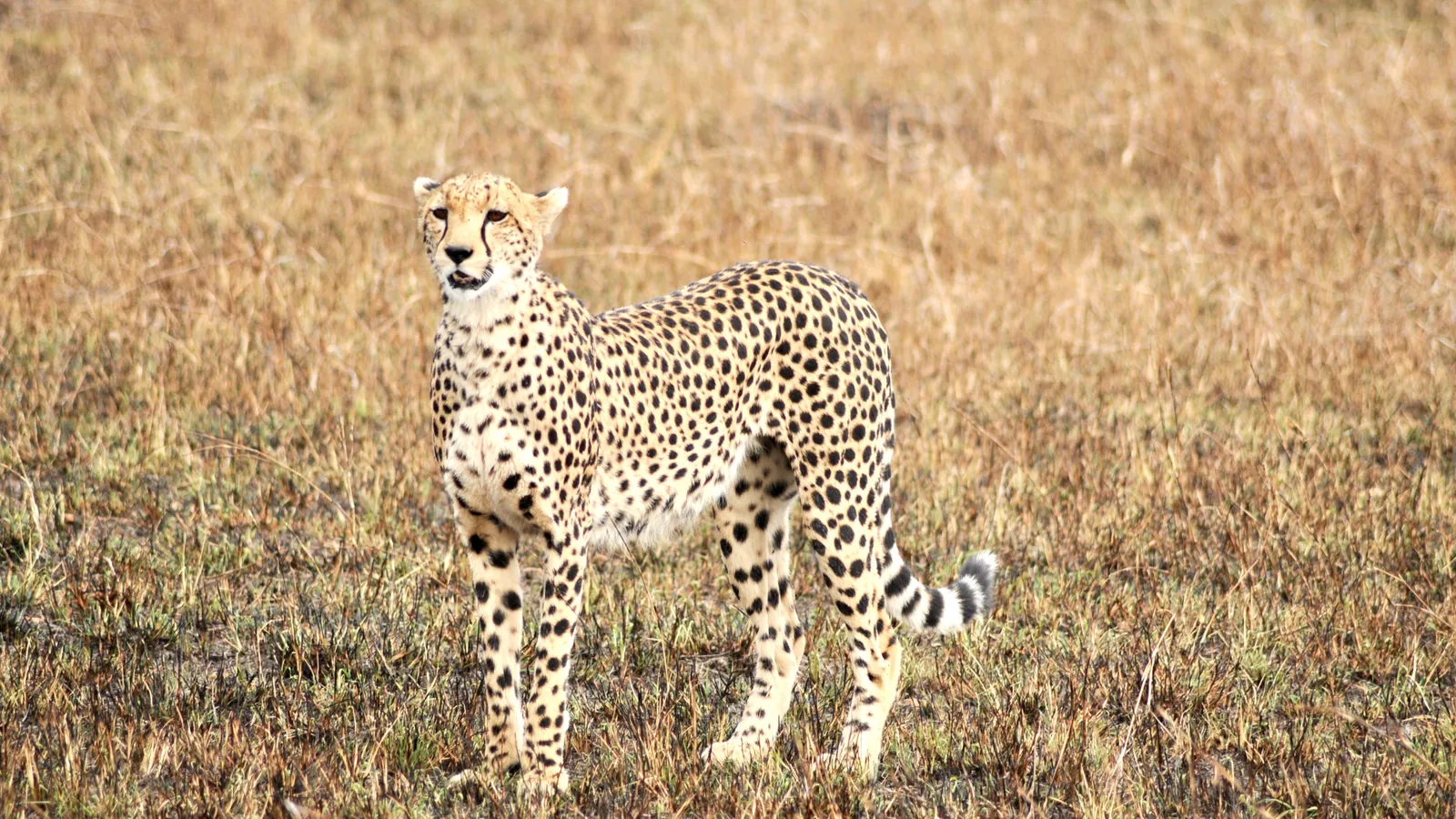
Both ecosystems are exceptional for lion, leopard, cheetah and spotted hyena, and both offer the Big Five: lion, leopard, elephant, buffalo and rhino. Rhino are the hardest to see in each, as they are rare and often shy.
- Masai Mara: famous for open plains with lion prides, cheetah and the long-running big cat family stories. Its compact size makes sightings easy to reach.
- Serengeti: has one of the largest lion populations in Africa, plus leopards among the rocky kopjes and cheetah on the southern and central plains. Sightings can feel more private.
In both countries, wildlife viewing is always luck and patience. Neither park is guaranteed to deliver a given species on a given day. Skilled guides and an unhurried schedule help far more than the country you pick.
Scenery and Maasai culture
The Serengeti offers sweeping, almost endless plains, granite kopjes, riverine forest, and acacia woodland towards the north and west. The Mara is gentler, with rolling grassland, the Oloololo Escarpment above the Mara Triangle and plentiful acacia and croton thickets. Both are photogenic, particularly in the soft light of early morning.
Maasai people live on both sides of the border, and their pastoral culture is part of the wider landscape. In Kenya, many conservancies are leased from Maasai landowners, so lodging and community income are often linked. In Tanzania, Maasai communities live in surrounding areas, including near the Ngorongoro highlands. If you wish to visit a village, ask for a respectful, community-led experience and agree the arrangements in advance.
Getting there: Arusha and Kilimanjaro vs Nairobi
Logistics often decide the matter, especially for shorter trips.
- Serengeti: most travellers fly into Kilimanjaro International Airport or Arusha, and then either drive on a scenic route via Ngorongoro or take a light aircraft to an airstrip in the park. Our team is based in Arusha, so this is the route we know best.
- Masai Mara: most travellers fly into Nairobi, then take either a light aircraft to a Mara airstrip or a long road transfer. Flights are the usual choice for short trips.
Combining the two means crossing between countries. The usual options are a scheduled or charter flight between the regions, a road journey with a border crossing, or a staged itinerary that flies out of one country and into the other. Border posts and routes change, so confirm current arrangements before you book. For visas, check official sources, because East Africa Tourist Visa details change.
Park fees, rules and accommodation styles
Park fee structures differ between Tanzania and Kenya. They are set separately by each country's authorities, may be charged per person per day, and change over time, so we do not list numbers here. Ask any operator to show exactly what is included before you compare quotes. Our guide to what drives Tanzania safari costs explains how fees, lodging and transport add up.
Accommodation is broadly similar in range, from simple tented camps to luxury lodges, and you can pick budget, mid-range or high-end in either country. In the Mara, camps sit either inside the national reserve or in the private conservancies around it. In the Serengeti, they sit within the park, with mobile camps that follow the herds in some seasons.
Conservancies, walking and night drives
This is a real difference worth knowing. Inside Serengeti National Park, and inside the Masai Mara National Reserve, rules are typically strict: driving stays on tracks, night drives are generally not permitted and walking is limited. Several of the private conservancies bordering the Mara, such as Mara North, Naboisho and Olare Motorogi, are reported to allow guided walks, night drives and off-road driving, and they limit the number of beds and vehicles. Rules vary by conservancy and can change, and only guests staying in a conservancy's camps usually have access, so confirm what is permitted when you book.
On our side, most of our packages include a free 2-hour walking safari, subject to park rules. We can explain where that is possible.
Hot air balloons
Dawn balloon flights operate in both the Serengeti and the Masai Mara, usually followed by a bush breakfast. They are an optional extra, weather dependent and priced separately. Ask when you plan your trip, because slots can fill in the busy months.
Head-to-head comparison
Here is the quick version, point by point.
- Size: Serengeti about 14,750 km2; Masai Mara reserve about 1,510 km2.
- Migration presence: Serengeti for most of the year; Mara typically from around July or August to October.
- Crowds: often lower in the Serengeti's vast interior; the Mara can be busier at popular sightings, though conservancies are quieter.
- Big cats: excellent in both; the Mara is compact, the Serengeti more spread out.
- Access: Arusha or Kilimanjaro for the Serengeti; Nairobi for the Mara.
- Activities: conservancies in Kenya may allow walks and night drives; the parks themselves are stricter.
- Fees: structured differently in each country; compare inclusions rather than headline rates.
- Balloons: available in both.
Which should you choose?
Match the destination to your priorities, then to your month.
By month
- January to March: choose the Serengeti and Ndutu for calving. The Mara has no main herds at this time.
- April to June: the Serengeti, in the quieter green season, is good value and uncrowded.
- July to October: both work. Choose the northern Serengeti or the Mara for river crossings, and book early because this is peak season.
- November to December: the Serengeti, as the herds return south.
By traveller type
- First-time visitors who want a classic, spacious safari: the Serengeti, often with Ngorongoro. Our 8-day Great Migration safari follows this idea.
- Short trips from Nairobi, or travellers wanting a quick, reliable big cat fix: the Masai Mara.
- Photographers and filmmakers wanting flexibility: either, with conservancies in Kenya offering more off-road freedom. We also run filming safaris.
- Honeymooners: both suit, so choose by season and by the lodge atmosphere you want.
- Families: both are workable. Children under 4 travel free on most of our packages.
How to see both
The best answer to Tanzania vs Kenya safari is often "both". A well-planned combination might start in the Masai Mara, cross to the northern Serengeti by flight or road and then continue south through the central Serengeti and Ngorongoro. Allow enough days, because crossing a border and moving between ecosystems takes time. Our guide on how many days you need for a Tanzania safari will help you plan the length.
Some of our AFCON 2027 packages combine Tanzania, Kenya and Uganda, for example the VIP safari with Masai Mara and Amboseli. We also offer classic safaris, filming safaris, honeymoon trips, and Bush & Beach with Zanzibar, in three price levels. Browse all safari packages, explore our destinations, or contact us and we will help you build a custom route.
Frequently asked questions
Is the Serengeti better than the Masai Mara?
Can I see the Great Migration in both Tanzania and Kenya?
Which has better river crossings, the Serengeti or the Mara?
How big is the Serengeti compared with the Masai Mara?
Can you do walking safaris and night drives in the Masai Mara?
Can I combine the Serengeti and the Masai Mara in one trip?
Strenger African Safaris Team
Safari planning team, Strenger African Safaris, Arusha.