Is Tanzania Safe for Tourists? Solo, Women and Families
Is Tanzania safe for tourists? Millions visit without incident, but cities carry petty-crime risks and roads need care. Here is an honest, practical breakdown.
Is Tanzania safe for tourists? For most visitors, yes, with sensible precautions. Most trips, including solo and family trips, pass without serious incident, but the risks are real and different in different places: petty theft and scams in cities, long road journeys, wildlife that must be respected, and occasional political unrest. A guided safari reduces most of these, and you should always read your own government's travel advice before booking.
This guide is written from Arusha, where we plan safaris every week. It is meant to be frank rather than reassuring for its own sake. If you want the short version, read the first section; if you are travelling alone, with children, or are nervous about a specific point, the later sections go into detail.
The short answer: how safe is Tanzania?
Tanzania has a long record of welcoming visitors, and tourism is central to its economy. The northern safari circuit around Arusha, Tarangire, Ngorongoro and the Serengeti is among the best-trodden routes in Africa, with established lodges, park rangers, experienced drivers and clear rules.
That said, "safe" is not a single yes or no. Official advice from governments reflects this. In general terms, the UK Foreign, Commonwealth & Development Office, the US State Department and Australia's Smartraveller have all taken a cautious tone on Tanzania, mentioning crime, the possibility of unrest and demonstrations, health risks and, in specific border regions, security concerns. The wording and levels change, so we will not quote a level here as if it were permanent. Check the live advice for your country right before you book and again before you fly.
The practical picture is this:
- Most common problems: bag snatching, pickpocketing, overcharging and scams in busy city areas.
- Most serious everyday risk: road traffic, especially on long drives and at night.
- Most avoidable risk: wildlife incidents, which almost always involve someone ignoring instructions.
- Most unpredictable risk: political demonstrations, which can appear with little notice and may disrupt movement and internet access.
None of these is a reason to stay at home. They are reasons to plan well, travel with people who know the ground, and keep your own judgement switched on.
Staying safe in Tanzanian cities
Most visitors pass through Arusha, Kilimanjaro airport, Dar es Salaam or Zanzibar's Stone Town. Cities are where you are most likely to meet opportunistic crime, as in most countries.
Petty theft and bag snatching
Phones, cameras and bags are the usual targets, especially in crowded markets, bus stations and on busy pavements. Official advisories also mention more serious crime in some urban areas, including after dark. The sensible response is boring and effective:
- Leave passports, spare cards and most of your cash in a hotel safe; carry a photocopy or a photo of your passport.
- Carry your phone on the side away from the road, and do not walk with it in your hand.
- Do not wear visible jewellery or hang a camera loosely from your neck.
- Avoid walking alone at night, even short distances. Use a taxi arranged by your hotel or a reputable app.
- If someone grabs a bag, do not resist. Belongings can be replaced.
Taxis, transfers and ATMs
Agree a price before getting into an unmetered taxi, or ask your accommodation to book one. Use ATMs inside banks or hotels, in daylight, and not with a stranger hovering nearby. Official advice warns about targeting of people withdrawing cash, so keep it low-key and do not flash a wad of notes.
Touts and scams
Friendly strangers who "just happen" to know a cheap safari, a closed road or a special ceremony are usually selling something. A polite "no, thank you" and walking on is enough. Book your safari through a registered operator you have contacted directly, not on the street or at the airport kerb.
Is a safari in Tanzania safe?
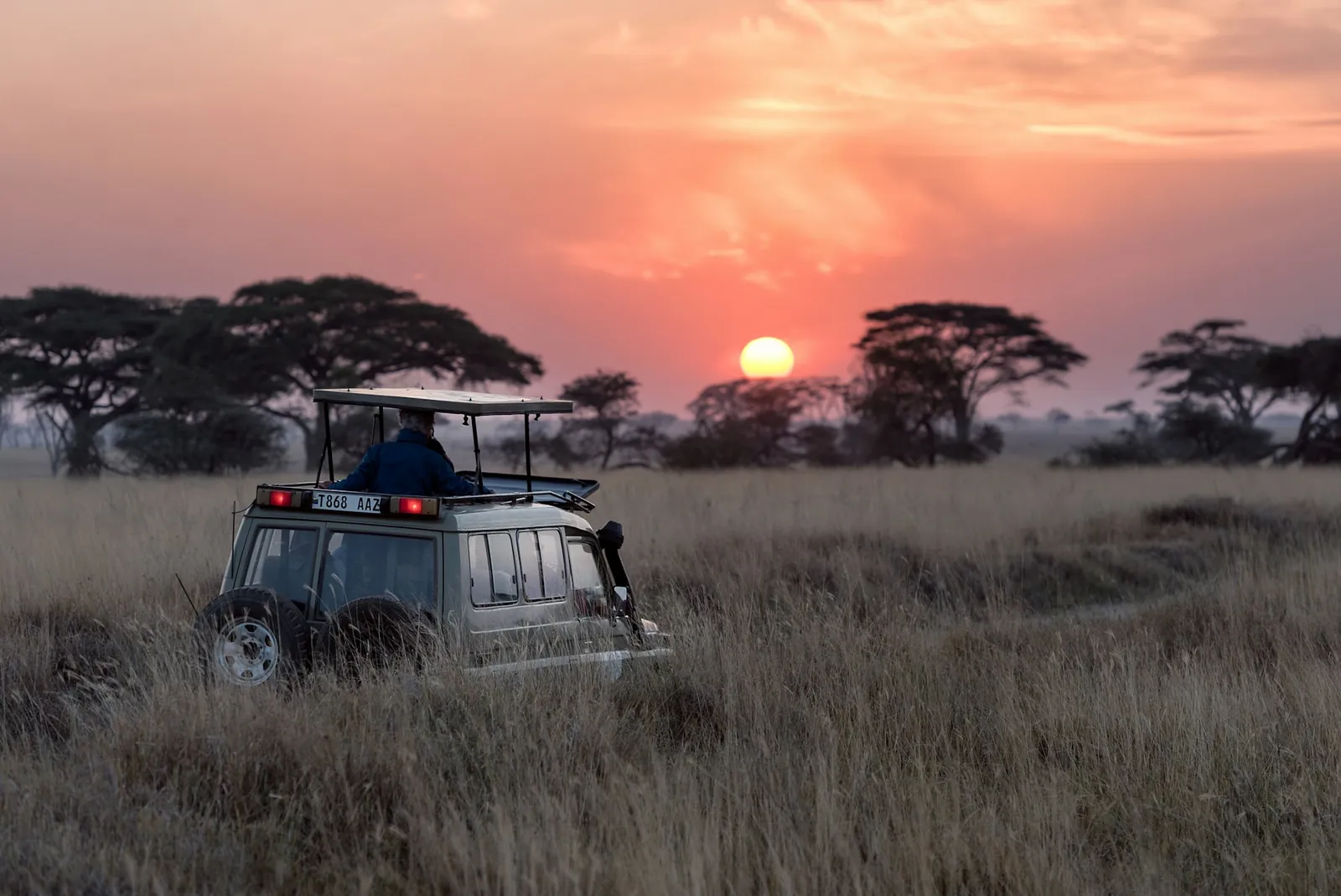
Yes, and this is the part of the trip that most people worry about least relative to its real risks. On a standard game-drive safari, your day is structured: a qualified driver-guide, a vehicle built for the terrain, set routes within national parks and park rules about distance from animals.
The animals are wild, but in protected areas they are habituated to vehicles. They generally treat a safari vehicle as one large object, not as a collection of people. The danger arises when people break that pattern: standing up on the roof, leaning out, getting out of the vehicle, or crowding an animal.
A good guide reads animal behaviour constantly. They know when an elephant is relaxed and when its ears and trunk say otherwise, when a lion is hunting and when a buffalo has been left alone too long. This is the single biggest way a guided safari reduces risk compared with wandering on your own.
Many visitors also ask about walking. Our packages generally include a free two-hour walking safari, subject to park rules, led by a qualified guide. If you are curious about how that differs from a vehicle game drive, read walking safari vs game drive.
Wildlife safety rules that actually matter
Wildlife rules are simple, and nearly every incident comes from breaking one of them.
- Stay in the vehicle unless your guide says it is safe to get out, at a designated picnic site or during a guided walk.
- Keep your voice low and your movements calm. Do not shout at animals or try to attract their attention.
- Never feed animals, including monkeys and baboons. They become bold, and they can bite or snatch bags.
- Keep food out of tents and rooms. Baboons and vervet monkeys are experts at opening zips.
- In unfenced camps, follow the escort rule. Staff will usually walk you to and from your tent after dark. Wait for them, and use the torch or whistle you are given.
- Do not walk off alone at dusk or dawn, when animals are most active.
- Respect the distance your guide and park rules set, especially around mothers with young.
Hippos, buffalo and elephants cause more concern than lions, which rarely bother people sitting inside a vehicle. Water edges and thick bush are where a guide's instructions matter most.
Road safety and long drives
Honestly, the road is the most statistically likely place for something to go wrong. Traffic in and around towns is busy and unpredictable, overtaking can be bold, and some stretches are poorly lit or have livestock and pedestrians at the edge.
On safari, you reduce this by not driving yourself. A professional driver-guide who knows the route, the vehicle and the conditions is far safer than a first-time visitor on unfamiliar roads. Whatever the vehicle, wear a seatbelt where one is fitted, and avoid travelling after dark. Reputable operators plan transfers to arrive in daylight.
Rainy season and road conditions
Tanzania's long rains usually fall from roughly March to May, and short rains around November. Dirt tracks in the parks can become slow, muddy or temporarily impassable, and some camps change access arrangements. This is not dangerous with an experienced guide, but it affects timing, comfort and what you can see. Plan flexibility into your itinerary during these months and ask your operator how they handle weather delays. Our guide to how many days you need for a Tanzania safari explains how to build in that buffer.
Health basics for visitors
We are not doctors, and requirements change, so treat this as a prompt, not medical advice. Check official sources and a travel clinic well before you go, ideally six to eight weeks ahead, for current vaccination and malaria guidance.
- Malaria is present in much of the country, so ask a clinician about prevention, and use repellent, long sleeves and nets in the evening.
- Water: drink bottled or treated water, and ask your guide about refills during the trip.
- Sun and altitude: the sun is strong on the equator, and some parts of the northern circuit sit at over 1,500 metres. Bring sunscreen, a hat, and drink plenty of water.
- Medication: carry personal prescriptions in original packaging, plus a basic kit for stomach upsets, blisters and small cuts.
- Food: eat at busy, freshly cooked places in towns, and peel or wash fruit.
Remote parks are hours from major hospitals, so make sure your insurance covers emergency evacuation. We return to that below.
Solo travellers and women travelling alone
People often ask us: is Tanzania safe for solo female travellers? Many women travel here alone and have a good trip. The honest answer is that the risks are those of any country with big cities and long distances, plus a few local specifics, and they are manageable with planning.
- Arrive in daylight where possible and have your first night's accommodation booked and confirmed.
- Arrange airport pick-up with a named driver rather than negotiating with the crowd outside arrivals.
- Dress modestly, particularly in Zanzibar and coastal towns, where the culture is more conservative. Covered shoulders and knees draw less attention and more respect.
- Be careful at beach resorts and bars. Official advice mentions that sexual assault of foreigners has occurred, including at beaches, so avoid isolated stretches at night, watch your drink and share your plans with someone.
- Expect attention and be polite but firm. Unwanted chatting is usually harmless, but you do not owe anyone your time.
- Keep someone at home informed of your itinerary and check in regularly.
Solo travel on a guided safari is also common. Many companies, ours included, can arrange a private departure or place you in a small group. The benefit for a solo traveller is simple: a guide handles the roads, the park rules and the logistics, and you are not alone in the bush. You can contact us to talk through a solo itinerary with a human before committing.
Travelling with family and children
Tanzania is a good family destination, if the pace suits your children. Younger children tend to cope better when days are short, with breaks, and when they have a window seat and snacks. Long drives and early starts are the main challenge, not danger.
- Choose an itinerary with shorter driving days and a rest day.
- Bring child-appropriate sun protection, hats and insect repellent.
- Ask camps in advance about age limits for activities and about fenced or unfenced layouts. Some properties have minimum ages for walks or for certain rooms.
- Teach children the vehicle rules: stay seated, stay quiet near animals, and never lean out.
- Check your clinic's advice on malaria for children before you travel.
Many of our packages let children under 4 travel free, and we plan family itineraries around the children's energy levels. Our detailed guide to a family safari in Tanzania with kids covers ages, pacing and packing.
Money, scams and sensible habits
Most money problems are small, but they are avoidable.
- Pay for your safari by a traceable method, to a business you have verified. Be suspicious of requests to send money to a personal account or by an unusual method.
- Confirm what is and is not included in writing, including park fees, so there are no surprises.
- Carry small notes for tips and snacks, and keep larger notes separate from your day wallet.
- Use cards carefully. Keep an eye on them at restaurants and shops, and notify your bank before you travel.
- Be wary of anyone who offers a "special price" that disappears if you do not decide immediately.
- Do not photograph government buildings, military sites or airports, and ask before photographing people.
Respecting local laws also matters. Drug penalties are severe, and photographing or posting about protests can lead to trouble.
Political demonstrations and travel advice
Political tension and demonstrations have affected parts of Tanzania, including around elections. They tend to be concentrated in cities, and the national parks have generally been far from the action. But protests can disrupt roads and flights, and authorities have limited internet access at times.
What to do:
- Read your government's current Tanzania travel advice or its equivalent. The UK, US and Australian governments all publish pages, and they are updated when circumstances change.
- Avoid protests and large crowds. Do not film or photograph them.
- Keep a flexible itinerary and a buffer day before international flights.
- Register with your embassy's traveller service if it has one.
- Keep your operator's phone number and a copy of your plans handy, so they can adapt if routes change.
A reputable operator will tell you honestly when conditions in a particular area are not right, and will help re-route. That local knowledge is one of the practical advantages of booking with a company based in Arusha.
Travel insurance and emergencies
We recommend you buy comprehensive travel insurance before you go. We do not sell it, and you should compare policies yourself. Look for:
- Medical cover with emergency evacuation, because the nearest good hospital may be far from the park.
- Cancellation and interruption cover, including for flight delays and weather.
- Cover for the activities you plan, such as walking safaris, balloon flights or Kilimanjaro treks, if relevant.
- Baggage, camera and phone cover with clear limits.
Keep a copy of your policy number and the emergency line on paper and on your phone. Tell your operator about any medical conditions in advance, so they can plan accordingly.
Practical safety checklist
Before you travel:
- Read your government's live Tanzania travel advice.
- See a travel clinic for health and malaria advice, and check official sources for entry and health requirements.
- Buy travel insurance with evacuation cover.
- Book through an operator you have verified, and ask what happens if something goes wrong.
- Share your itinerary with someone at home.
On the ground:
- Keep valuables in the safe and your phone out of sight in cities.
- Use taxis arranged by your hotel or operator, and avoid walking alone at night.
- Follow your guide's instructions on wildlife, always.
- Drink safe water and use repellent at dusk.
- Keep a flexible mind if weather or events change the plan.
If you would like to see how a guided trip fits together, browse our safari packages, read the travel guide, or send us your questions through the contact page. We offer classic safaris, filming safaris, Bush & Beach trips with Zanzibar, honeymoons and AFCON 2027 packages across three price levels.
Frequently asked questions
Is Tanzania safe for tourists right now?
Is Tanzania safe for solo female travellers?
Is a safari in Tanzania safe?
Are the roads in Tanzania dangerous?
Do I need malaria tablets or vaccinations for Tanzania?
Is Tanzania safe for families with young children?
Strenger African Safaris Team
Safari planning team, Strenger African Safaris, Arusha.