Walking Safari vs Game Drive in Tanzania: Which to Choose

A game drive covers more ground and finds big animals; a guided walking safari in Tanzania shows tracks, insects and trees up close. Most trips combine both.
Short answer: a game drive is the best way to cover distance and see big animals, including lions, elephants and the migration herds. A walking safari in Tanzania is slower and smaller in scale, but it teaches you tracks, plants, insects and the way a landscape fits together. Walking is only allowed in certain areas and always with a qualified guide, so most travellers do both.
If you are weighing a walking safari vs a game drive for your first trip, the useful question is not which is better but which one does what. This guide explains what each activity is, what you can and cannot see, where walking is permitted, the safety rules, and how to put the two together in one itinerary.
What is a game drive?
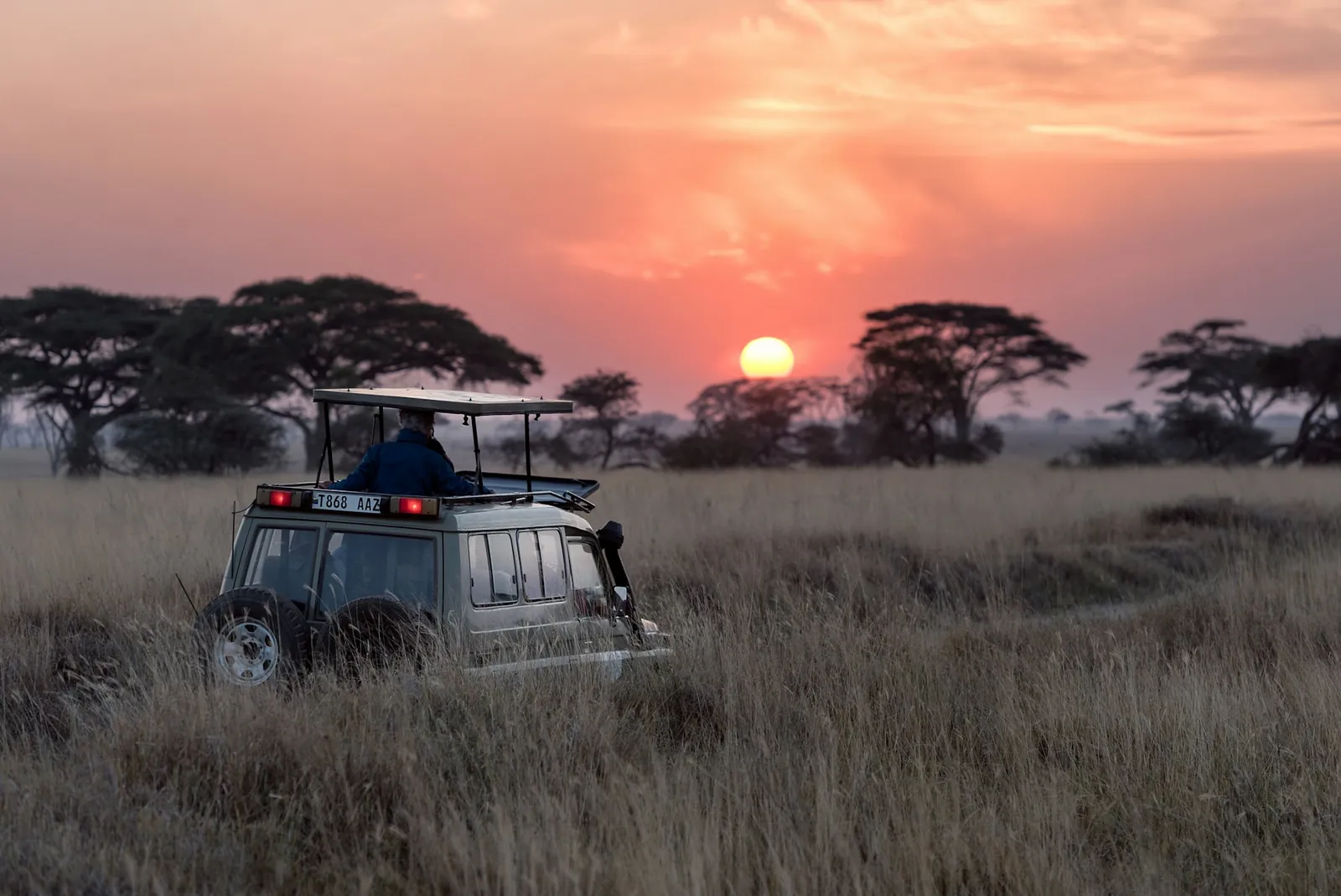
A game drive is a wildlife outing in a 4x4 safari vehicle, usually with a pop-up roof or open sides, led by a driver-guide. In Tanzania it is the main activity in nearly every national park and conservation area. Drives normally run in the early morning and late afternoon, when animals are most active and the light is soft, and many itineraries add a full-day drive with a picnic lunch in big parks such as the Serengeti.
The vehicle is the reason a game drive works so well. Wildlife has learned over decades that vehicles are not a threat, so lions, elephants and giraffes will often stay put while you watch from a few metres away. You also sit above the grass, which gives you a better view, and you can cover many kilometres in a single morning to find a specific animal or follow a report of a kill.
What is a walking safari?
A guided walking safari is an on-foot wildlife outing led by a trained guide, usually accompanied by a ranger where park rules require it. You walk in a small group at a slow, steady pace, often in single file, and stop every few minutes to look at something small: a track, a termite mound, a bird's nest, a plant that local people use as medicine.
Do not expect a hike with a big-game checklist. The point of walking is the detail that a vehicle passes at 20 km/h. Most walks are short and gentle, from around one to three hours, and are timed for early morning when it is cool and animals are moving. Longer, multi-day walking safaris exist in a few remote areas, but they are a different category of trip, with their own camps and logistics.
What you see and feel: walking vs driving
The two activities give you different kinds of experience, and neither is a lesser version of the other.
On a game drive
- Big animals at close range. Predators resting in the shade, elephant families at a waterhole, giraffe feeding at the roadside.
- Scale and movement. Wide plains, river crossings, and large herds that you could never follow on foot.
- Photography. The vehicle is a stable platform, and you can move to follow the light.
- Comfort. Shade, seats and space for cameras, water and children.
On a walking safari
- Reading the ground. Your guide explains which animal passed, how long ago, which way it was heading, and why.
- Small life. Dung beetles, ant-lions, termites, spiders, lizards and the birds that depend on them.
- Plants and uses. Which tree gives shade, which gives gum, which gives fruit, and what each means for the animals that live around it.
- Sound and smell. With no engine running you hear alarm calls, wind in the grass and the rustle of something moving, and you smell wet earth, sage and dung.
- A sense of being inside the landscape. Many people say this is the part they remember longest, even if the animals seen were modest.
What you can and cannot see on foot
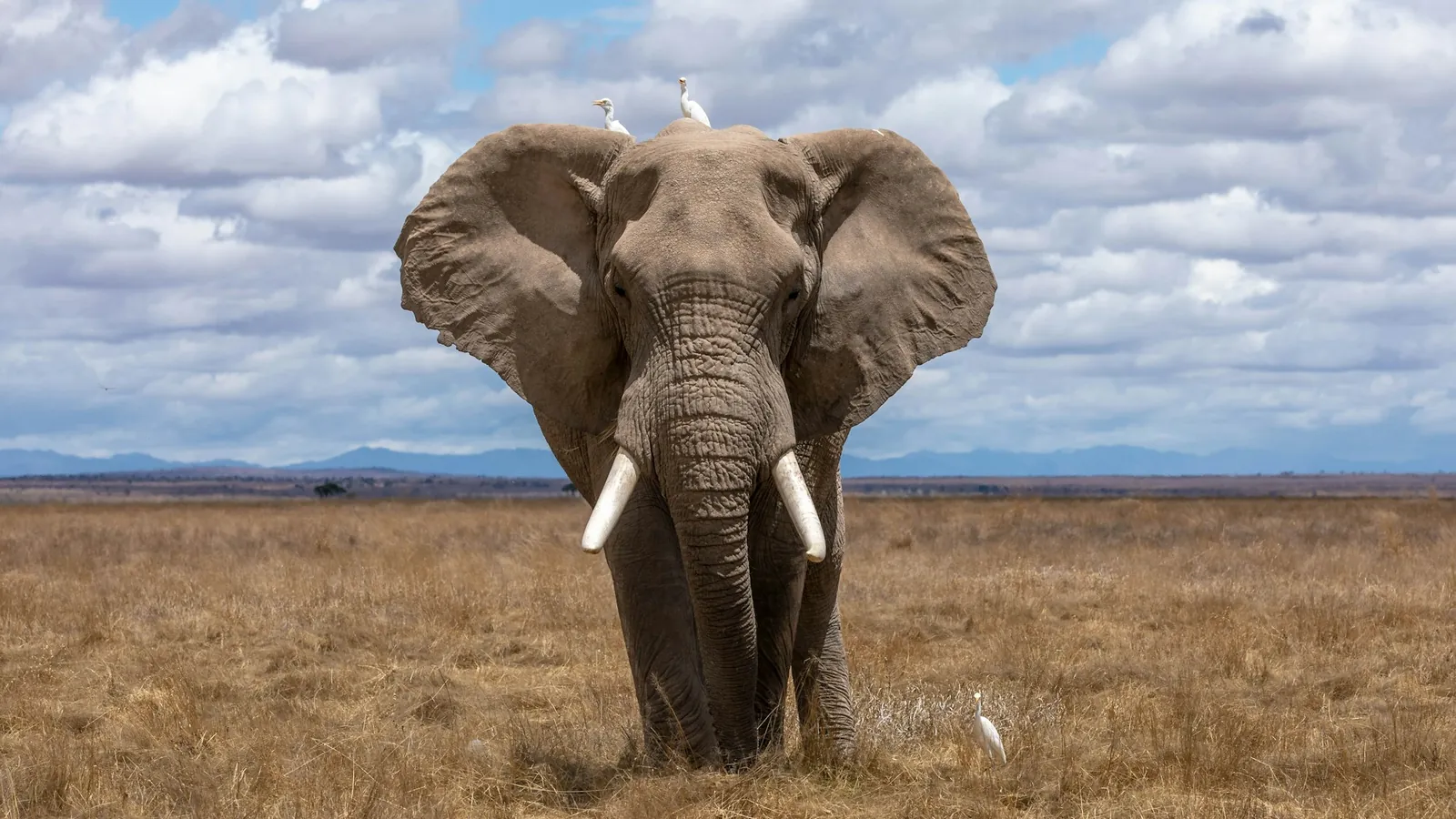
On foot, you will most often see plains game and smaller animals: impala, zebra, giraffe, warthog, baboons, monkeys, dik-dik, and a wide range of birds. Elephant and buffalo sometimes appear at a distance, and a good guide will read the wind and the animals' behaviour long before you notice them. Tracks and signs of leopard, hyena and lion are common, even when you never see the animal itself.
What you should not expect is a reliable close encounter with a big cat, a river crossing, or a large migration herd. Guides deliberately keep a safe distance from dangerous animals, and they will change direction rather than approach. If your top priority is lions, leopards or the migration, a game drive is the better tool. If your priority is understanding the bush, walking wins.
Where walking safaris are allowed in Tanzania
This is where travellers get caught out. Walking is not permitted everywhere. Rules differ by park, conservation area and concession, and they are set by the authorities that manage each place, not by tour operators. Many national parks require visitors to stay in the vehicle outside designated areas, and walks are allowed only on approved routes or in areas where the regulator has granted permission.
Based on what is published by operators and guides, walking is commonly offered in these types of places, though you should always confirm for your exact dates:
- Arusha National Park. Guided walks with a park ranger are a well-known activity here, and the park's compact size and varied scenery suit short walks.
- Nyerere National Park (formerly part of the Selous). Often described as one of Tanzania's main walking destinations, with walks run from camps under park rules.
- Ruaha National Park. Walks may be possible from certain camps, depending on current regulations.
- Selected parts of the Serengeti. Guided nature walks are offered in certain areas and concessions, not across the whole park, and some have higher minimum ages.
- Ngorongoro Conservation Area highlands and Lake Empakaai. Walks in the highlands are a different type of experience, with views, forest and crater rims rather than open plains. Walking inside the Ngorongoro Crater itself is not permitted.
- Tarangire and Lake Manyara. One operator describes Tarangire walks as needing a special permit because park authorities do not usually authorise walking within park limits. Treat these as case-by-case.
Because these rules change, we do not promise a walk in every park. Where park rules allow it, a walk can be added to a safari, and we will tell you before you travel which parks on your route have it available.
Safety, group size and the briefing
Walking on foot among wild animals is safe when it is done to a clear set of rules. Reputable walks follow the same pattern.
- A qualified guide, and a ranger where required. You never walk alone, and you never choose the route. Park rules in some areas require a ranger to accompany the group.
- A safety briefing before you start. The guide explains how to walk in single file, how to keep a steady pace, what hand signals mean, and what to do if an animal appears. The most important rule is to follow instructions at once and without arguing.
- Small groups. Walks are normally kept small, often around six guests or fewer, because a large group is noisy and harder to manage. Group size limits depend on the park.
- Quiet and calm. No running, no sudden movements, no loud talking. If an animal is close, you stop, stay together and let the guide handle the situation.
- Sensible clothing. Closed shoes with grip, long trousers or light layers, a hat, sunscreen and water. Neutral colours such as khaki, olive and grey are better than white or bright shades. For more detail, see our guide on what to wear on safari.
For wider questions about personal safety in the country, read is Tanzania safe for tourists and solo travellers.
Fitness, age limits and best times
A typical walk is not strenuous. You need to be able to walk for a couple of hours on uneven ground at an easy pace, in warm weather, and to stand still quietly when asked. If you can manage a long walk at home, you can manage most safari walks. People with limited mobility, balance problems or a bad back should say so when booking, so the right activity can be chosen.
Age limits are set by the park or area and sometimes by the operator or camp, so they vary. Published figures range from about 12 to 16 years, and the figure of 12 appears most often in operator information. We could not find a single official rule that applies everywhere, so ask before you book, especially if you travel with teenagers. For vehicle-based safaris with young children, see our family safari guide.
On timing, early morning is the best time for a walk almost everywhere. It is cooler, the light is gentle, and animals are still active. The dry season, roughly June to October, usually gives better visibility because the grass is shorter and wildlife gathers near water. The green season, roughly November to May, brings lush scenery and many birds, but taller grass makes tracking harder and some trails can be wet. If you want to line up your trip with the herds, read the best time to see the Great Migration.
Ethics: walking responsibly
Walking puts you on the animals' ground, so the standards of behaviour are higher than in a vehicle. A good walk leaves no trace.
- Keep distance and let animals leave on their own terms. Never try to approach for a photo.
- Stay on the guide's route. Wandering off damages vegetation and can put you in danger.
- Take your litter with you, including small items like wrappers and tissues.
- No feeding, no calling, no throwing objects. All of these change animal behaviour.
- Respect local land and people. Some walking areas are used by communities. Ask your guide how to behave and whether photographs are appropriate.
- Choose operators who follow park rules. An unlicensed walk in a restricted area puts you, the guide and the wildlife at risk.
Walking safari vs game drive: a direct comparison
Use these points to compare the two quickly.
- Pace: a game drive is fast and covers many kilometres; a walk is slow and covers a few.
- Big animals: a drive gives the best chance of seeing predators and large herds; a walk offers fewer and more distant sightings.
- Small details: a walk is far better for tracks, insects, plants and birds.
- Access: drives are available in almost every park; walks are allowed only in certain places and with a guide.
- Age and fitness: drives suit all ages and abilities; walks often have minimum ages and need basic fitness.
- Photography: a drive is better for long lenses and steady shots; a walk suits close-up and landscape photography.
- Cost and planning: a walk is usually an extra activity that must be arranged in advance; a drive is the default.
- Feel: a drive is like watching a documentary from the front row; a walk is like being in it.
Which is right for you?
Your choice depends on what you want from the trip and who is travelling.
- First safari, with a short time in Tanzania: prioritise game drives, and add a walk if a park on your route offers one.
- Keen photographers: game drives for subjects and light, with a walk for texture and detail shots.
- Families with young children: game drives will make up most of the trip; check the age limit before planning a walk with older children.
- Nature lovers and repeat visitors: a walk is a good way to get more from a landscape you have already seen from a vehicle.
- Travellers with limited mobility: stay with drives and ask us about gentle alternatives such as lodge-grounds nature walks.
- Honeymooners and couples: a quiet early-morning walk followed by a relaxed afternoon drive is a good rhythm.
How to combine both on one safari
The best itineraries use both. Drives do the work of finding big animals and moving between areas; walks add a slower, more observant morning. A common pattern is an early walk where the park allows one, a rest at midday, and an afternoon game drive.
At Strenger African Safaris, we include a free 2-hour walking safari on most of our packages, subject to park rules. That wording matters: where a park does not permit walking, we will say so and suggest an alternative. You can compare options on our safari packages page, or look at the Flamingo safari package as an example of a shorter itinerary. For planning help on seasons, parks and visas, see our travel guide, or contact us and tell us your dates, group and priorities.
Frequently asked questions
Is a walking safari safer than a game drive?
Where can I do a walking safari in Tanzania?
What is the minimum age for a walking safari in Tanzania?
Will I see lions and elephants on a walking safari?
How long is a typical walking safari and how fit do I need to be?
Does Strenger African Safaris offer walking safaris?
Strenger African Safaris Team
Safari planning team, Strenger African Safaris, Arusha.